How Scientists Discover New Planets: An Easy Guide for Classes 6 to 10
Have you ever looked up at the night sky and wondered if there are other worlds hidden among the twinkling stars? Learning how scientists discover new planets is one of the most exciting journeys in modern astronomy. Beyond our own Solar System lie thousands of mysterious distant worlds called exoplanets. For students in middle and high school, understanding how scientists discover new planets reveals the incredible power of light, gravity, and human ingenuity. Astronomers cannot simply point a standard backyard telescope into deep space and take a clear photograph of a distant world. Instead, they must rely on clever indirect detection methods, space observatories, and advanced astrophysics tools. In this comprehensive student guide, we will explore all the major techniques space agencies like NASA use to hunt for new worlds across the cosmos.
1. What Are Exoplanets and How Scientists Discover New Planets?
Before diving into detection techniques, we must understand what astronomers are searching for when studying how scientists discover new planets. An exoplanet, or extrasolar planet, is any world that orbits a star located outside our own Solar System. Because stars shine with immense brightness while planets merely reflect a tiny fraction of light, finding these worlds is like trying to spot a tiny firefly buzzing next to a giant searchlight miles away. Understanding how scientists discover new planets requires learning about indirect observation—measuring the subtle effects a world has on its parent star rather than seeing the planet directly with human eyes.
2. The Transit Method: How Scientists Discover New Planets Through Light Dips
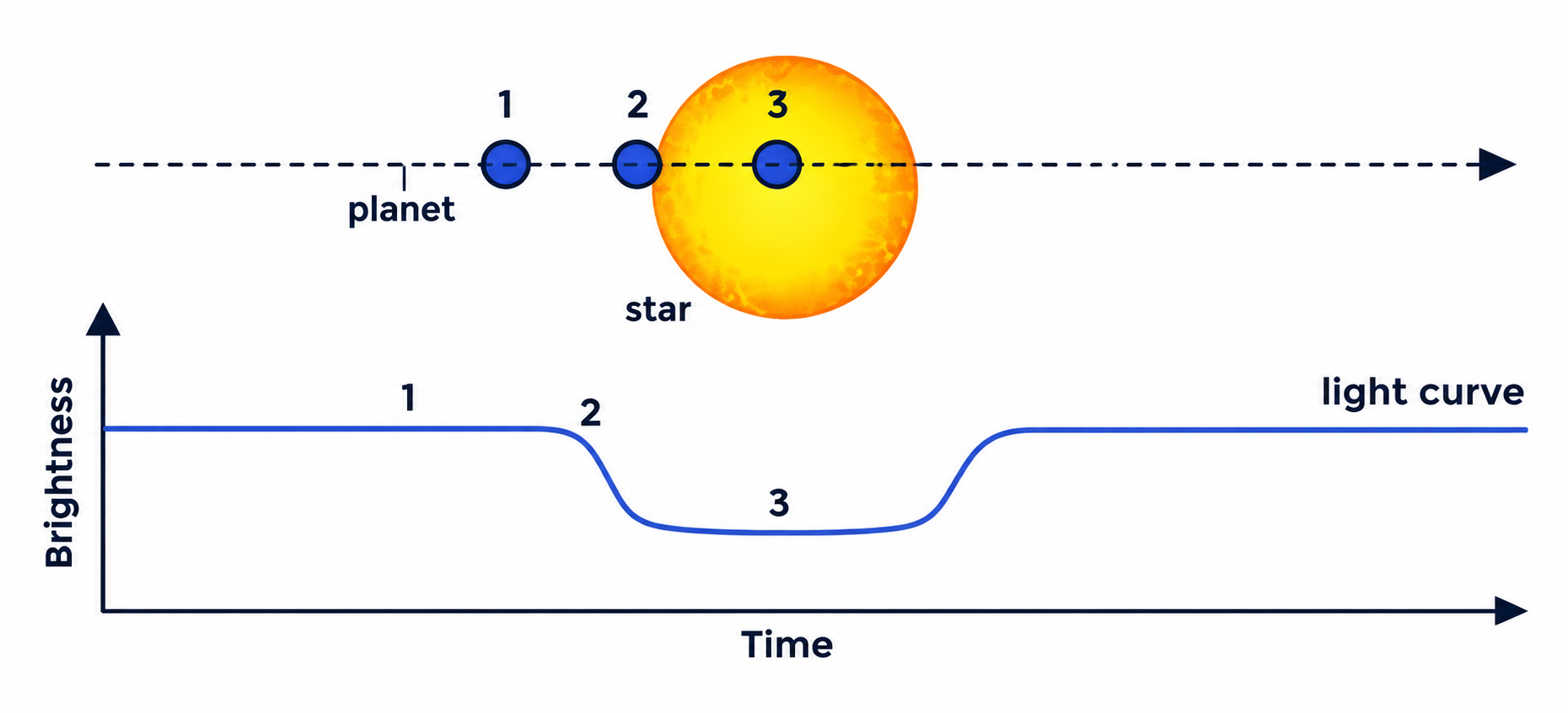
The transit method is currently the most successful technique when investigating how scientists discover new planets. When a planet passes directly between its host star and Earth, it blocks a tiny amount of the star’s light. Astronomers record this periodic dimming using sensitive light-measuring instruments called photometers.
Understanding the Transit Method in How Scientists Discover New Planets
During a transit event, the brightness of a distant star drops temporarily in a predictable pattern. By monitoring millions of stars continuously, space telescopes can detect these miniature eclipses. This key technique helps scientists calculate both the physical size of the planet and how fast it completes one full orbit around its star.
Why the Transit Method Matters in How Scientists Discover New Planets
This approach allows astronomers to scan vast fields of stars all at once, making it the top discovery method in modern history. Space observatories like NASA’s Kepler Space Telescope and TESS (Transiting Exoplanet Survey Satellite) have uncovered thousands of confirmed alien worlds using transit photometry. You can read more about these discoveries on the official NASA Exoplanet Exploration portal.
3. The Radial Velocity Method: How Scientists Discover New Planets via Star Wobbles
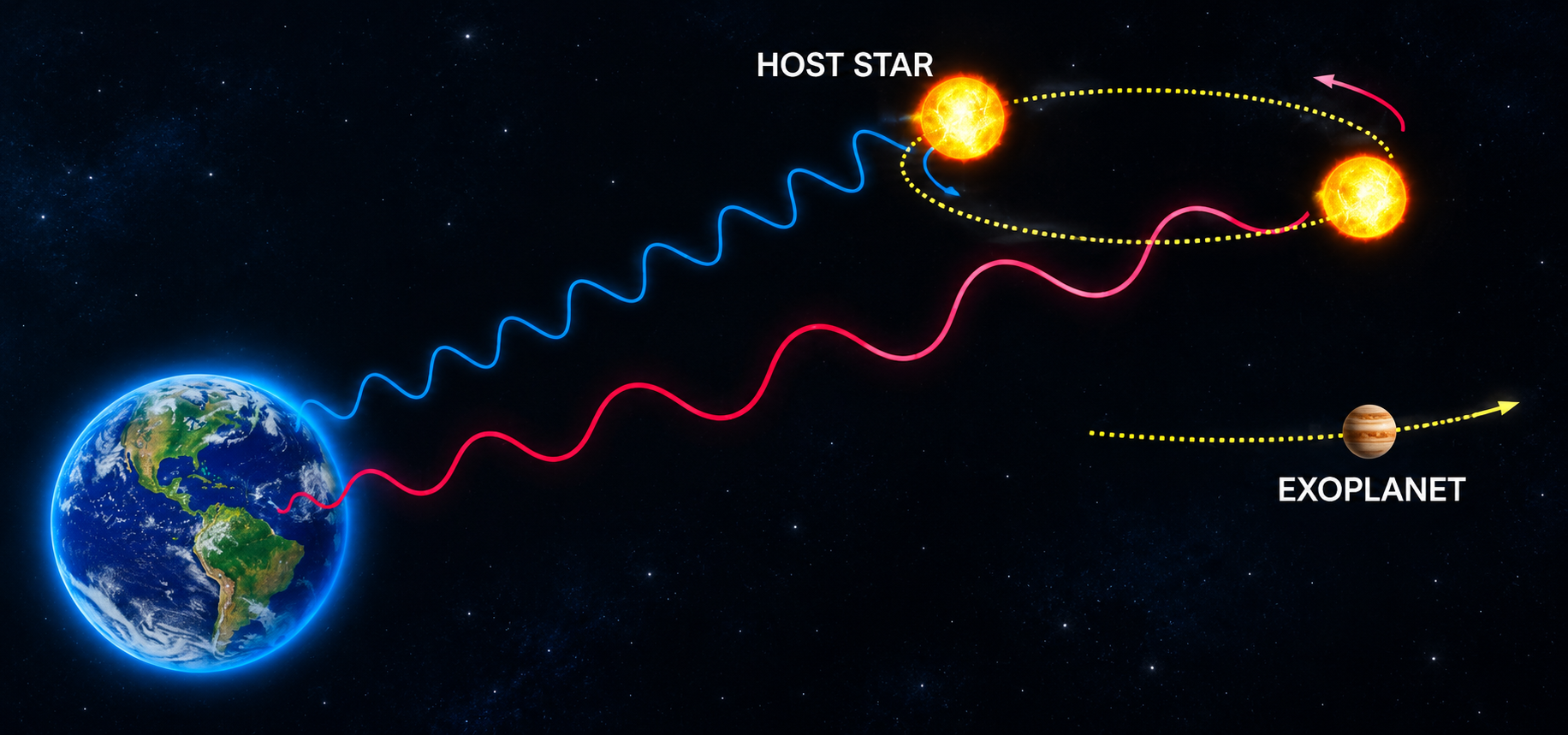
Another landmark technique in how scientists discover new planets is the radial velocity method, often called the Doppler wobble technique. Planets do not just orbit a stationary star; instead, both the star and the planet orbit a shared center of mass. This gravitational tug-of-war causes the host star to wobble slightly back and forth in space.
The Doppler Effect and How Scientists Discover New Planets
As the star wobbles toward Earth, its light waves get compressed and shift toward the blue end of the spectrum (blueshift). As the star wobbles away from Earth, its light waves stretch toward the red end of the spectrum (redshift). High-precision instruments called spectrographs measure these subtle color shifts to reveal the hidden presence of an orbiting world.
Estimating Mass in How Scientists Discover New Planets
The radial velocity method is especially important because it tells scientists the minimum mass of the hidden world. A larger, heavier planet pulls harder on its parent star, causing a more noticeable wobble. This method led to the very first discovery of an exoplanet orbiting a Sun-like star back in 1995.
4. Gravitational Microlensing: How Scientists Discover New Planets Using Gravity as a Lens
Gravitational microlensing is a fascinating application of Albert Einstein’s general theory of relativity within how scientists discover new planets. Gravity actually bends the path of light traveling through space. When a foreground star with an orbiting planet passes directly in front of a background star, the foreground star’s gravity acts like a giant natural magnifying glass.
Bending Star Light in How Scientists Discover New Planets
As the foreground system aligns perfectly with the distant star, it magnifies the background star’s brightness. If the foreground star has a planet, that planet’s gravity creates an extra spike in brightness. Astronomers capture this sudden, temporary flare to confirm the presence of a distant, otherwise invisible world.
Deep Space Mapping in How Scientists Discover New Planets
Microlensing is unique because it allows astronomers to detect small, rocky planets located extremely far away near the center of our Milky Way galaxy. Detailed scientific explanations of gravitational bending can be explored on the European Southern Observatory (ESO) research pages.
5. Direct Imaging: How Scientists Discover New Planets by Taking Real Photographs
Taking an actual photograph of a distant world is the most direct approach in how scientists discover new planets. However, because host stars are billions of times brighter than their orbiting worlds, direct imaging is extremely difficult and reserved for special cosmic arrangements.
Blocking Starlight in How Scientists Discover New Planets
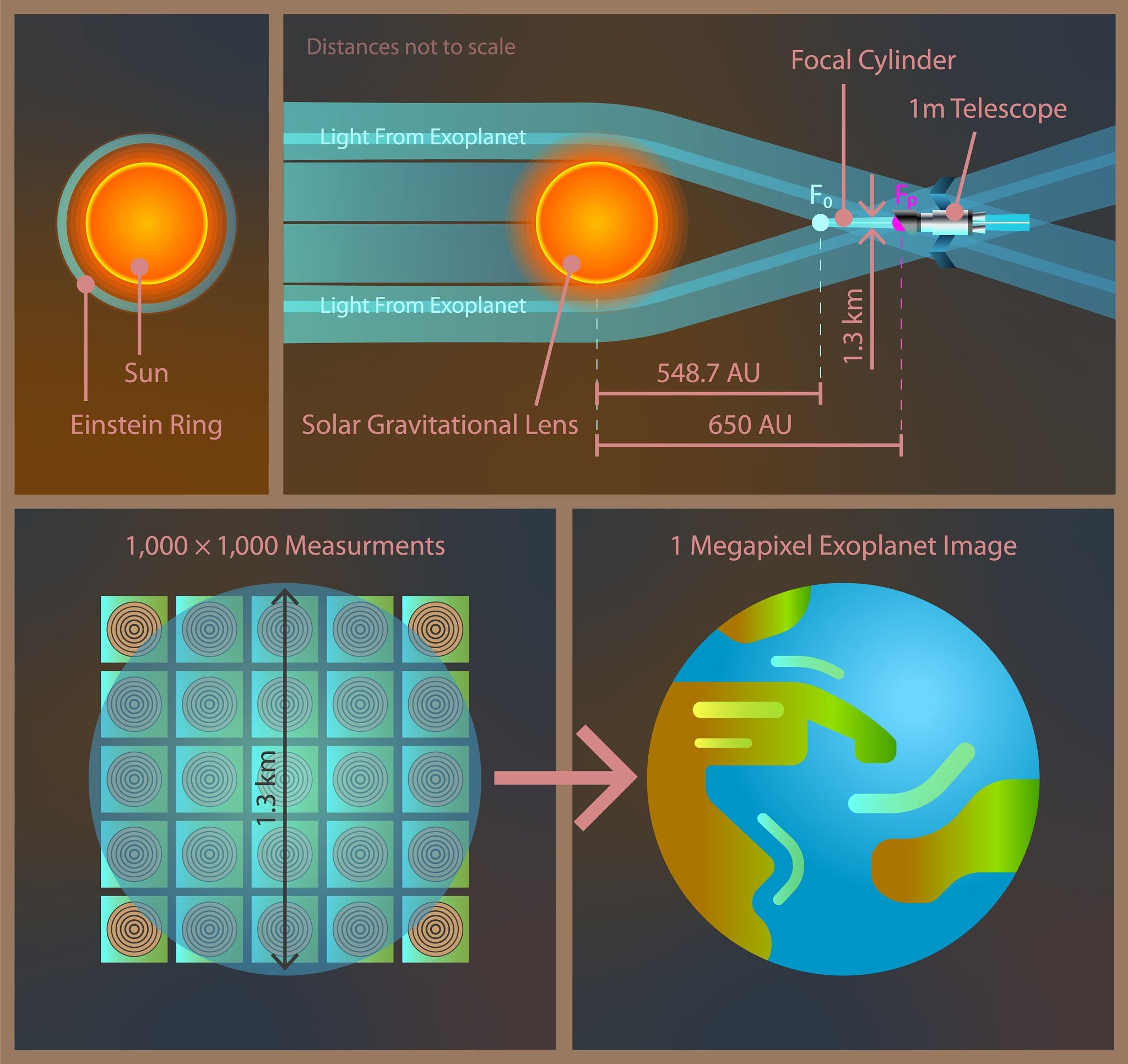
To take a photograph of an exoplanet, astronomers use specialized equipment called a coronagraph or a starshade. These devices fit inside or in front of a telescope to block the overwhelming glare of the star, allowing the dim light reflecting off nearby giant planets to show through clearly.
Target Selection in How Scientists Discover New Planets
Direct imaging works best for very large gas giant planets that orbit far away from young, hot stars. This method provides scientists with direct light samples that can be analyzed to determine what gases exist on the planet’s surface.
6. Astrometry: How Scientists Discover New Planets by Tracking Precise Star Movements
Astrometry is the oldest method of tracking celestial bodies, yet it plays a modern role in how scientists discover new planets. Unlike the radial velocity method which measures speed variations, astrometry involves taking precise measurements of a star’s physical position in the sky over several years.
Precision Measurements in How Scientists Discover New Planets
As an unseen planet orbits a star, its gravitational pull causes the star to execute a tiny dance across the background sky. Astrometry pinpoints these ultra-tiny position changes relative to surrounding reference stars.
Modern Space Mapping in How Scientists Discover New Planets
Astrometry requires extreme precision that is almost impossible to achieve through Earth’s turbulent atmosphere. Advanced space missions like the European Space Agency’s ESA Gaia Mission use space-based astrometry to map billions of stars and discover massive hidden planetary companions.
7. The Role of Space Telescopes in How Scientists Discover New Planets
Earth’s atmosphere causes stars to twinkle, which distorts light measurements. Therefore, key breakthroughs in how scientists discover new planets have come from placing powerful telescopes directly into space.
Space Observatories and How Scientists Discover New Planets
Space telescopes operate above Earth’s atmosphere, giving them an uninterrupted view of the universe. Instruments like NASA’s Hubble Space Telescope, Kepler, TESS, and the James Webb Space Telescope (JWST) have transformed planetary science by collecting crystal-clear data across optical, ultraviolet, and infrared wavelengths.
Infrared Astronomy in How Scientists Discover New Planets
The James Webb Space Telescope uses powerful infrared detectors to peer through dusty cosmic clouds and capture light from distant worlds, allowing scientists to study planet formation in unprecedented detail.
8. Analyzing Alien Atmospheres: How Scientists Discover New Planets with Water and Air
Finding a planet is only the first step in how scientists discover new planets. Once an exoplanet is located, astronomers want to know what its air is made of and whether it could support life. They achieve this using a technique called transmission spectroscopy.
Transmission Spectroscopy in How Scientists Discover New Planets
When a planet transits its star, a small portion of the star’s light filters through the planet’s atmosphere before reaching Earth. Chemical elements and molecules—such as water vapor, carbon dioxide, methane, and oxygen—absorb specific colors or wavelengths of light, leaving distinct chemical fingerprints in the spectrum.
Searching for Habitability in How Scientists Discover New Planets
By analyzing these spectral absorption lines, scientists can determine atmospheric temperature, weather patterns, cloud coverage, and overall habitability without ever visiting the planet in person.
9. The Goldilocks Zone: How Scientists Discover New Planets Capable of Supporting Life
A major goal within how scientists discover new planets is finding Earth-like worlds capable of hosting liquid water. Astronomers refer to the ideal distance around a star as the circumstellar habitable zone, or the Goldilocks Zone.
Temperature Balance in How Scientists Discover New Planets
If a planet orbits too close to its host star, surface water boils away into gas. If it orbits too far, liquid water freezes into solid ice. A world in the Goldilocks Zone sits at just the right distance where surface temperatures allow liquid water oceans to exist.
Star Types and How Scientists Discover New Planets
Smaller, cooler red dwarf stars have habitable zones that sit very close to the star, while larger, hotter yellow stars like our Sun have habitable zones situated much further out.
10. How Students Can Explore Exoplanet Data at Home
You do not need a professional observatory to participate in how scientists discover new planets. Today, citizen science projects allow students in Classes 6 to 10 to access real space data from home or school computers.
Citizen Science in How Scientists Discover New Planets
Projects like NASA’s Planet Hunters invite everyday citizens to analyze light curves collected by space observatories. Human eyes are exceptionally good at spotting subtle light dips that automated computer algorithms sometimes overlook.
Classroom Projects in How Scientists Discover New Planets
Students can use free online databases and light-curve simulators to practice finding new worlds, mapping orbital periods, and participating directly in real scientific research.
11. Summary of Exoplanet Discovery Methods
| Discovery Method | Primary Measurement | Best Suited For | Key Advantage |
| Transit Method | Dips in starlight brightness | Planets orbiting edge-on | Measures planet size and orbital speed |
| Radial Velocity | Shifts in star light spectrum (Doppler shift) | Massive planets close to stars | Measures planet minimum mass |
| Gravitational Microlensing | Magnification of background star light | Distant planets near galaxy center | Finds small planets far from Earth |
| Direct Imaging | Infrared light photos of planets | Young, giant planets far from host stars | Direct light analysis of atmospheres |
| Astrometry | Tiny physical position shifts of stars | Massive planets with long orbits | Provides true mass and orbital inclination |
Key Takeaways for Middle and High School Students
Understanding how scientists discover new planets highlights how teamwork, physics, and technology combine to uncover cosmic secrets. Astronomers use indirect detection methods—such as watching stars dip in brightness, measuring star wobbles, and observing gravitational light bending—to discover thousands of alien worlds scattered across the Milky Way galaxy. As space observatories continue to evolve, the next generation of student scientists may soon discover the very first evidence of life beyond Earth!