10 Easy AI and Robotics Projects for Students
Introduction to Classroom STEM Learning
The landscape of modern education is shifting rapidly toward interactive science, technology, engineering, and mathematics (STEM) activities. Introducing hands-on innovation early equips young minds with foundational computational thinking skills necessary for the modern workplace. Implementing AI and robotics projects in elementary, middle, and high school classrooms bridges abstract theory with tangible physical applications. Students learn better when they can visually witness their code interact with real-world hardware. Exploring practical AI and robotics projects demystifies complex algorithms, machine learning models, and mechatronics into accessible learning experiences.
Why Interactive Robotics Matter for Students
Building physical machines helps learners cultivate strong problem-solving abilities and creative confidence. STEM education thrives when students can test hypotheses in real time through hardware construction and software programming. Engaging with easy robotics builds teaches kids how to debug circuits, write logic loops, and collaborate in team environments. You can learn more about open-source microcontrollers at Arduino, which provides accessible hardware boards for classroom experimentation. Implementing structured AI and robotics projects ensures students understand basic sensor integration, motor controls, and computer vision without feeling overwhelmed by advanced engineering frameworks.
1. Line-Follower Robot
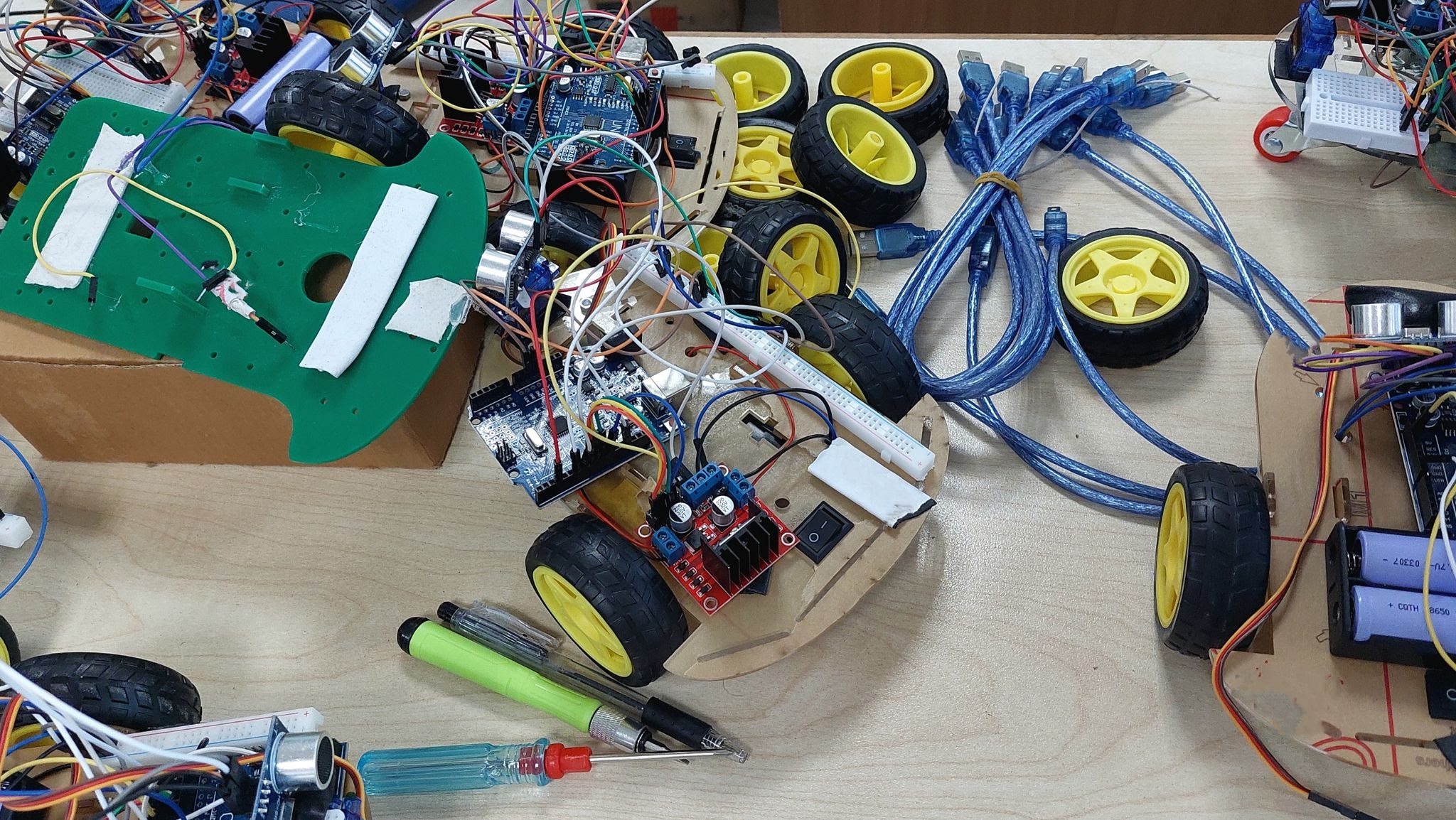
A line-follower robot serves as a classic introduction to autonomous mobile navigation. Infrared sensors detect contrast differences between dark lines and light floor surfaces to guide the chassis. Students program a micro-controller board like an Arduino Uno or BBC micro:bit to drive small direct-current motors based on sensor inputs. This easy robotics build teaches fundamental feedback loops and hardware wiring in an intuitive manner. Constructing AI and robotics projects like line-follower cars allows students to experiment directly with physical path tracking and real-time obstacle avoidance.
2. Obstacle-Avoiding Rover
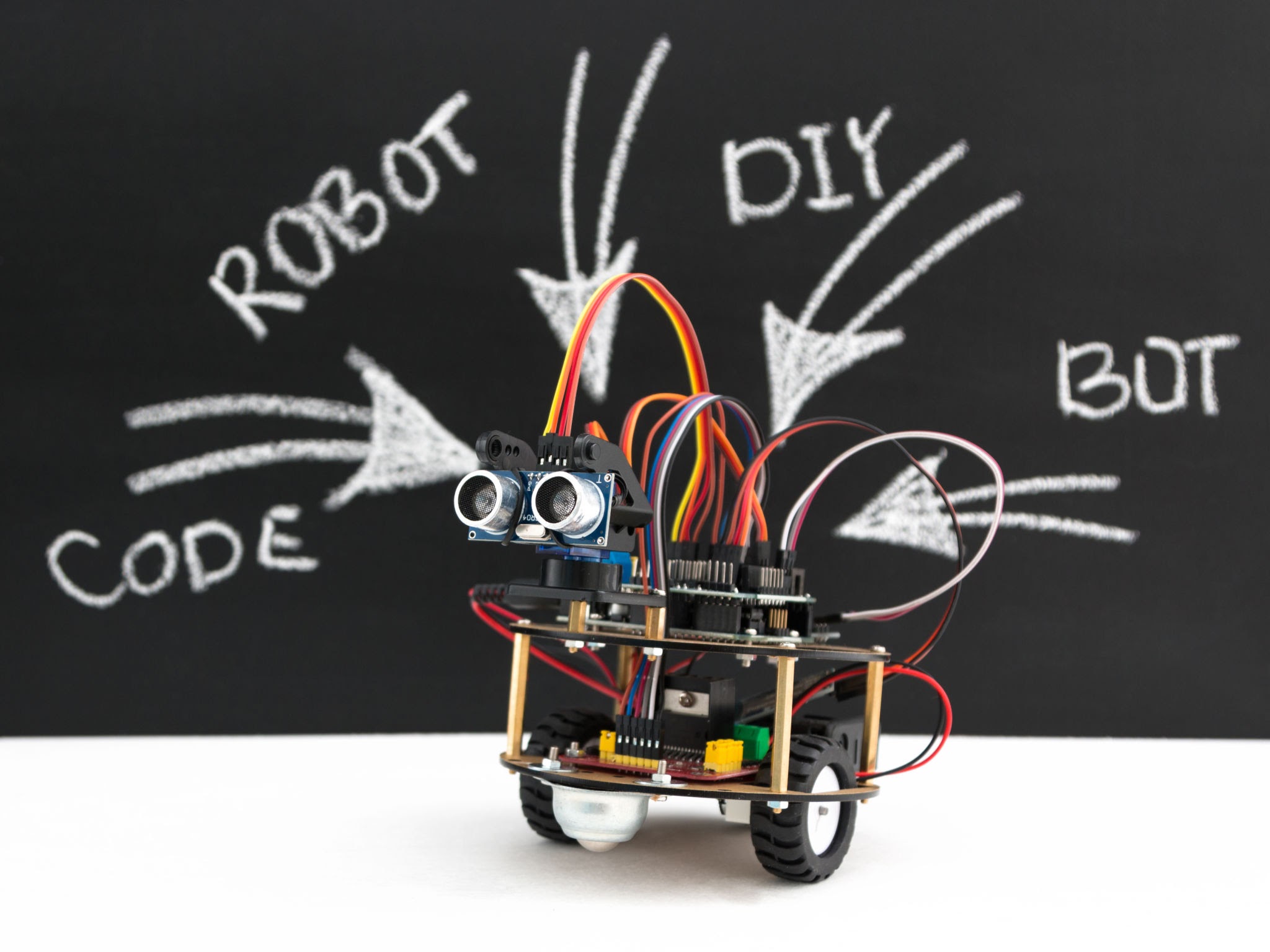
An obstacle-avoiding rover uses sonar technology to navigate complex rooms autonomously. Ultrasonic sensors emit high-frequency sound waves that bounce off walls, calculating clearance distances to trigger motor direction changes. Students learn how to program threshold conditions that prevent physical collisions. Discover more about beginner micro-computing modules at the official Raspberry Pi platform, which offers low-cost boards perfect for classroom integration. Integrating AI and robotics projects such as smart rovers demonstrates basic spatial awareness, reactive programming, and mechanical assembly.
3. Teachable Machine Image Classifier
Image classification brings artificial intelligence straight to classroom laptops using basic webcams. Computer vision algorithms train on image datasets captured directly by students to recognize objects, facial expressions, or hand signals. Using platforms like Google Teachable Machine, students train custom neural networks without writing complex lower-level code. Building software-centric AI and robotics projects helps young learners understand training datasets, model precision, classification confidence, and algorithmic bias in a user-friendly digital environment.
4. Smart Trash Can with Servo Lid
A smart trash can combines motion detection with mechanical actuation for hygienic waste management. Servo motors open and close the container lid automatically whenever an infrared proximity sensor detects an approaching hand. Students build the housing using lightweight cardboard or 3D-printed chassis components. Developing practical AI and robotics projects like touchless waste bins gives students an authentic taste of consumer product design, energy management, and practical automation solutions.
5. Voice-Controlled Smart Light System
Voice recognition systems allow students to interact with electronic circuits using spoken commands. Natural language processing interfaces interpret phrases like “light on” or “light off” to activate light-emitting diodes (LEDs) or micro-relays. Students can integrate speech-recognition software libraries with compact microcontroller boards. Exploring smart home AI and robotics projects teaches students how modern voice assistants operate while introducing speech pattern matching and digital output control loops.
6. Smart Plant Watering System
Automated gardening setups show how technology aids agricultural sustainability. Soil moisture sensors measure hydration levels continuously, triggering a mini submersible water pump whenever the soil becomes too dry. Students calibrate the threshold sensitivity to suit specific plant species. Constructing environmental AI and robotics projects connects biological sciences with automated electronic control systems, proving how engineering addresses real-world agricultural challenges.
7. AI Gesture-Controlled Robotic Arm
Gesture-guided mechanical arms offer an exciting look into modern industrial automation. Kinematic control structures read hand movements captured via laptop webcams or wearable accelerometer gloves to mirror human motions. Students program small servo motors on a multi-axis mechanical arm to match mapped coordinates. Building advanced AI and robotics projects introduces human-robot interaction design, spatial mapping, and multi-motor synchronization techniques.
8. Bluetooth Teleoperated Car
Remotely operated vehicles introduce mobile app development alongside wireless communications. Bluetooth modules establish serial data links between smartphone controllers and micro-controller boards on the vehicle chassis. Students build custom controller interfaces using block-based coding platforms like MIT App Inventor. Designing wireless AI and robotics projects teaches wireless networking protocols, mobile interface design, and motor driver configuration.
9. Automated AI Waste Sorting Box
Intelligent waste sorting combines optical object recognition with physical mechanical sorting mechanisms. Machine learning models identify whether an item placed under a camera is recyclable plastic, paper, or general waste. Servo motors then tilt a directional chute to drop the item into the designated bin. Creating sorting-focused AI and robotics projects demonstrates environmental engineering applications, sorting mechanics, and real-time inference integration.
10. AI Chatbot Classroom Assistant
Digital assistant chatbots provide a purely software-driven entry point into artificial intelligence. Text generation models are configured by students to answer frequently asked questions about class schedules, homework assignments, or science facts. Students use simple Python scripts or visual programming tools to structure conditional dialogue trees and API calls. Developing interactive software AI and robotics projects helps students grasp dialog management, natural language understanding, and conversational AI ethics.
Implementing Projects in the Classroom Curriculum
Integrating hands-on technology builds into existing school schedules requires structured planning and accessible tools. Curriculum integration works best when teachers begin with visual, block-based coding environments before transitioning to text-based languages like Python or C++. Providing collaborative team roles—such as hardware architect, programmer, and project manager—ensures every student engages meaningfully with the material. Explore additional student resources and coding activities on Code.org to support foundational computer science instruction. Embracing structured AI and robotics projects unlocks creative potential, fosters critical thinking, and prepares students for future technological careers.