How AI Personalization is Revolutionizing How Students Learn: The Rise of Smart Tutors
For generations, the structure of global education has remained largely unchanged: one teacher, standing in front of thirty or more students, delivering a uniform curriculum at a single, standardized pace. This traditional model, while historically necessary, has always suffered from a fundamental flaw. It forces teachers to design lessons for the “median student,” leaving advanced learners disengaged and struggling students left behind.
As we progress through 2026, this unyielding “one-size-fits-all” framework is actively collapsing.
We are living through a massive paradigm shift driven by the rapid maturity of AI personalization in education and the rise of highly sophisticated, purpose-built smart tutors. Powered by advanced cognitive computing, real-time diagnostic analytics, and large language models (LLMs) trained specifically on learning science, these adaptive systems are rewriting the rules of how students learn.
Whether you are an educator navigating a tech-integrated classroom, a parent looking to secure your child’s academic future, or an EdTech developer designing next-generation software, this comprehensive analysis explores how smart tutors and personalized learning platforms are democratizing elite, one-on-one instruction globally.
1. Defining the Shift: What is AI Personalization in Education?
Before exploring the technical mechanics, it is vital to understand what authentic AI personalization in education represents. It is not merely putting a physical textbook onto a tablet, nor is it about giving students access to standard, open-ended generative chatbots.
True personalization is an automated, real-time pedagogical cycle.
When a student interacts with a personalized platform, the system does not just track right and wrong answers. It tracks response latency, hover patterns, mouse movements, error categories, and cognitive processing speed. It uses this multi-layered behavioral dataset to construct a dynamic, digital model of the student’s mind. The software then rewires the curriculum on the fly, delivering custom-tailored explanations, interactive analogies, and remedial exercises designed specifically for that unique individual.
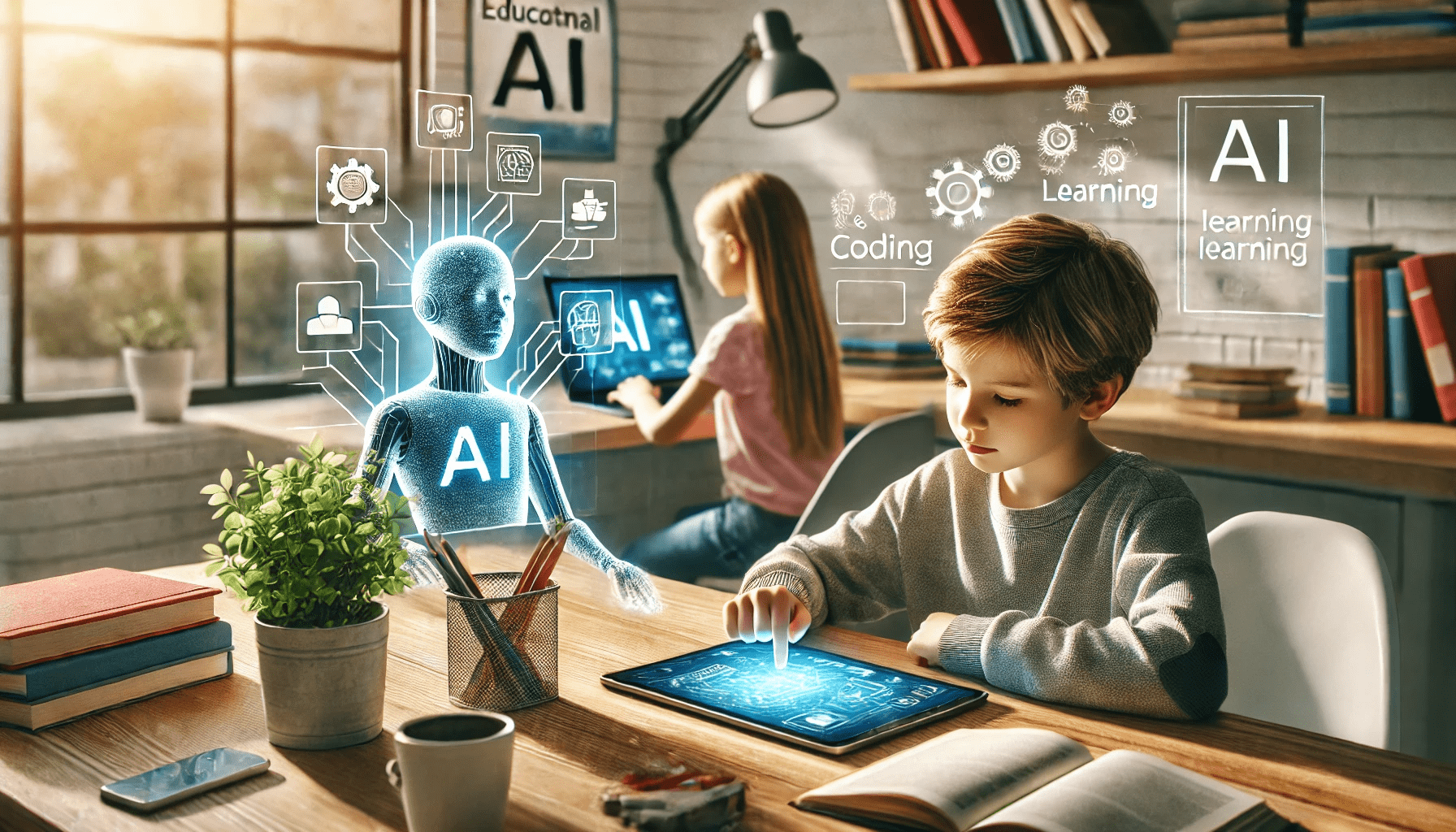
2. The Mechanics of the Modern Smart Tutor: How Adaptive Learning Algorithms Work
The magic behind the modern smart tutor lies in its underlying computational architecture. Unlike legacy, linear learning systems, modern adaptive platforms rely on three interconnected models:
The Domain Model: A highly detailed map of a specific subject area. For example, in mathematics, it maps out how “addition” is a dependency for “multiplication,” which in turn is a dependency for “algebra.”
The Learner Model: A real-time, evolving profile of the individual student. It monitors their current knowledge state, cognitive limits, attention retention trends, and emotional frustration levels.
The Pedagogical Model: The instructional engine. It uses machine learning and reinforcement loops to decide how to teach. Should it explain the concept using a visual diagram, a block of text, or a Socratic questioning sequence?
By continuously cross-referencing these three models, smart tutors ensure that a student is always operating in their “Zone of Proximal Development”—the sweet spot where content is challenging enough to promote active learning but not so difficult that it triggers cognitive paralysis.
3. Beyond the Scripted Prompt: Purpose-Built AI Tutors vs. Generic Chatbots
One of the most critical realizations of 2026 is that generic, consumer-grade chatbots are structurally ill-suited for educational environments. When students use open-ended, general-purpose LLMs to study, the machines frequently act as “answer generators.” They do the thinking for the student, providing immediate solutions that bypass the critical struggle phase of learning.
According to research highlights published in the OECD 2026 Generative AI Education Outlook, there is a profound difference between task completion and cognitive mastery. Educational authorities are aggressively prioritizing purpose-built educational generative AI tools over generic assistants.
Purpose-built smart tutors are programmed with “Socratic scaffolding.” When a student presents a difficult physics numerical or algebra problem, the AI does not simply output the final answer. Instead, it asks guiding questions, prompts the student to identify core variables, and walks them through the conceptual logic step-by-step. This structural guidance preserves “productive friction,” ensuring that the student’s brain actively processes and retains the underlying information.
4. Cognitive Trajectory Modeling: Explaining Learning and Memory Recall
To appreciate how adaptive learning systems optimize human comprehension, we must examine how they model a student’s cognitive state. Traditional learning structures ignore the biological reality of the human forgetting curve. AI personalization, however, uses smart spacing algorithms to calculate the estimated moment a memory is about to decay and automatically targets it for active retrieval practice.
Rather than relying on static timers, the system evaluates how deeply a concept is embedded in a student’s mind by looking at their historical practice cycles. It tracks how closely the system’s prior explanations matched the student’s native cognitive style, alongside the volume of active recall exercises they have completed.
By continuously analyzing these behavioral signals across thousands of microscopic learning concepts, the smart tutor dynamically schedules review sessions. When the software’s explanations are highly aligned with the student’s comprehension style, the rate of memory decay slows down dramatically. This allows learners to secure top-tier academic results while spending significantly less time on repetitive, brute-force memorization.
5. Driving Academic Excellence: What the Latest 2026 Research Tells Us
The historical skepticism surrounding digital education has been completely dismantled by robust, peer-reviewed data. Recent global research shows that personalized AI tutors are delivering historic, measurable gains in academic performance.
According to a comprehensive study compiled in Engageli’s AI in Education Statistics, a randomized controlled trial found that students using a purpose-built AI tutor scored significantly higher on standardized assessments than those in traditional active learning classrooms, showing historic improvements in overall test performance.
Furthermore, the data shows that:
Students utilizing AI-personalized learning achieved up to 54% higher test scores across mathematics, science, and language arts compared to traditional peer cohorts.
AI-personalized learning environments increased student engagement rates by up to 60% and improved learning efficiency by 57%.
Schools implementing early warning, AI-driven diagnostic tracking recorded a 15% reduction in student dropout rates, identifying struggling learners before their grades began to slip.
These statistics prove that AI personalization in education is not a passing technological novelty; it is the most powerful learning accelerator engineered in modern history.
6. Mitigating Metacognitive Laziness: The "Productive Friction" Principle
While the benefits of AI are undeniable, researchers warn of a major psychological hazard known as metacognitive laziness. When a technology makes finding answers too easy, the human brain stops working, bypassing the essential cognitive effort required to form permanent neural pathways.
To prevent this hollowing-out of student capability, leading EdTech platforms in 2026 are integrating “desirable difficulties” directly into their UX designs.
Rather than allowing students to copy-paste questions into chat bars, smart tutors require students to write out their hypotheses, draw diagrams, or explain their reasoning step-by-step. The AI acts as an encouraging mentor, validating the student’s thinking process rather than simply grading the final output. By keeping the student in the driver’s seat, these platforms turn homework from a passive task into an active, self-directed exploration.
7. Bridging the Educational Divide: Accessibility and Equity in the AI Era
Historically, elite, personalized, one-on-one tutoring was a luxury reserved exclusively for the wealthiest families. For millions of students in underfunded public systems or remote rural locations, high-quality, customized instruction was completely out of reach.
The rapid democratization of AI tutoring tools is permanently leveling this playing field.
Multimodal AI assistants now support over 80 languages, translating complex scientific curricula and localized dialects in real time. For students with special educational needs (SEN), AI acts as an invaluable adaptive aid. Visually impaired students can interact with smart tutors using conversational, high-fidelity voice interfaces, while neurodiverse students can adjust the visual and cognitive pacing of lessons to match their processing styles without facing the social anxiety of a public classroom.
To learn more about how international education leaders are establishing global policy standards to ensure equity and public safety in digital learning, you can consult UNESCO’s Digital Learning Week 2026 resource hub, which acts as the premier global clearinghouse for ethical educational transformations.
8. The Teacher-AI Teaming Framework: Co-Pilot Synergy Over Human Replacement
A major fear during the early phases of the generative AI revolution was that computer programs would make human teachers obsolete. However, as 2026 unfolds, the consensus is clear: AI will not replace teachers; however, teachers who use AI will replace teachers who do not.
The modern educational model relies on a highly collaborative teacher-AI teaming framework designed to alleviate educator burnout:
+------------------------------------+------------------------------------+
| What the AI Co-Pilot Manages       | What the Human Teacher Focuses On  |
+------------------------------------+------------------------------------+
| 24/7 homework & conceptual queries | Bedside manner, empathy, and care  |
| Automated, standard grading        | One-on-one emotional mentoring     |
| Diagnostic performance profiling   | Facilitating collaborative debates |
| Draft lesson plans & quiz generation| Character development & ethics     |
+------------------------------------+------------------------------------+
According to extensive teacher surveys compiled in Azumo’s 2026 AI Education Market Report, educators who actively use AI as a classroom co-pilot save an average of 5.9 hours per week. By automating administrative paperwork, grading, and routine explanations, AI frees teachers to focus on what they do best: inspiring, challenging, and mentoring the next generation of leaders.
9. Key EdTech Trends to Watch: Multimodal AI and Voice-Interactive Tutoring
The technological capabilities of personalized education are expanding past standard text-based chat boxes. The next frontier of smart tutors is characterized by several key emerging trends:
Multimodal Interfaces: Students can draw a physics diagram on a touchscreen, upload a photo of a messy handwritten mathematical calculation, or speak directly to their device. The AI analyzes all inputs simultaneously to diagnose conceptual errors.
Voice-First Interaction: Conversational voice systems specifically trained on children’s speech profiles allow younger students (Grades K-5) to learn to read, practice phonics, and build language skills through natural, friendly verbal dialogue.
Real-Time Affective Computing: Using standard webcams, advanced smart tutors can read micro-expressions and eye tracking data. If the system detects signs of visual frustration or cognitive fatigue, it automatically simplifies the next task, cracks a lighthearted joke, or prompts the student to take a short, refreshing break.
10. How to Select High-Quality AI Personalization Platforms
With thousands of new EdTech tools entering the market, parents and educators must remain highly selective. Use this checklist to identify a truly high-quality, pedagogically-sound platform:
Pedagogical Alignment over Gamification: Ensure the platform prioritizes deep conceptual understanding over flashing badges, virtual avatar dresses, and distractive video side-quests.
Privacy and Safety Compliance: For platforms serving minors, verify strict compliance with global child data protection regulations (such as COPPA and GDPR) to ensure student biometrics and learning data are completely encrypted and never sold to third-party advertisers.
Actionable Progress Portals: Choose platforms that provide clear, visual dashboards showing exactly where a student is struggling, their current learning velocity, and suggestions for real-world teacher/parent interventions.
11. Conclusion: Preparing for the Future of Self-Directed Learning
The definitive verdict of the modern educational landscape is highly empowering: the future of education belongs to the self-directed learner, powered by the analytical precision of artificial intelligence.
By transitioning from a rigid, industrial-era classroom model to a dynamic, hyper-personalized learning trajectory, we are unlocking the unique potential of every student. Through the strategic integration of smart tutors and adaptive learning systems, we can build a balanced preparation ecosystem where students master complex academic concepts at their own pace, overcome learning anxiety, and develop the lifelong critical thinking skills required to thrive in a fast-evolving, digital-first economy.
Embrace the technological co-pilot, protect the productive friction of active learning, support your child’s emotional well-being, and step confidently into an era where world-class, personalized mentorship is available to every child, everywhere.