10 Amazing Scientific Discoveries of 2026 Every School Student: Latest Research, Space Science and Future Technologies
Science is moving faster than ever before! The year 2026 has delivered groundbreaking scientific discoveries, extraordinary advances in space science, and revolutionary future technologies that are reshaping our understanding of the universe. For school students and young science enthusiasts, staying updated with the latest research helps spark curiosity and inspires future STEM careers. From crewed lunar journeys to deep ocean mantle drilling and advanced quantum breakthroughs, let us dive into the top 10 most mind-blowing scientific discoveries of 2026 every school student should know about!
1. NASA’s Artemis II Mission and the New Era of Lunar Exploration
Humanity has taken a giant leap back toward deep space exploration with NASA’s crewed Artemis II mission. Flying four astronauts past the far side of the Moon aboard the Orion spacecraft, this mission marks the first time humans have ventured beyond low Earth orbit since the Apollo era. This incredible milestone in space science allows researchers to test critical life-support systems, radiation shielding, and navigation technologies needed for permanent lunar bases. For school students following latest research in astronomy, Artemis II proves that living and working on other celestial bodies will soon become a reality. You can learn more about crewed spaceflight directly on the NASA Space Exploration Portal.

2. Unlocking the Cosmos with the Nancy Grace Roman Space Telescope
Among the biggest scientific discoveries of 2026, NASA’s Nancy Grace Roman Space Telescope stands out as a flagship observatory designed to uncover the mysteries of dark energy and dark matter. Equipped with a panoramic wide-field view 100 times greater than the Hubble Space Telescope, this powerful instrument captures vast swaths of the night sky in infrared light. School students interested in space science will love how the Roman telescope searches for distant exoplanets through gravitational microlensing. The observatory provides fresh data on cosmic acceleration and structure, proving that future technologies in optics and computational astrophysics can unlock secrets from the edge of time.
3. High-Efficiency Tandem Perovskite-Silicon Solar Cells
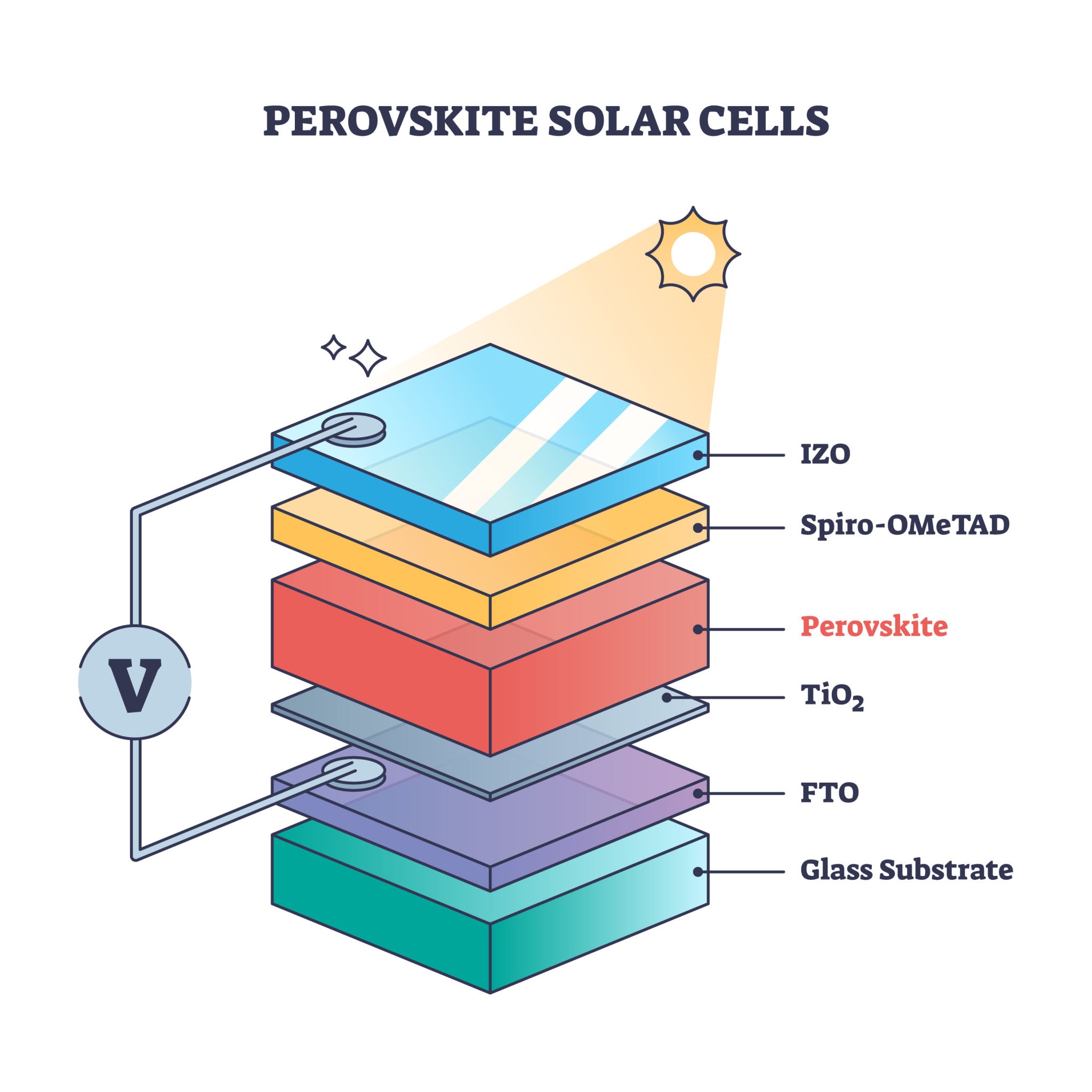
Clean energy technology achieved a massive breakthrough in 2026 with commercialized tandem perovskite solar cells. By layering synthetic perovskite materials on top of traditional silicon, materials scientists pushed solar energy conversion efficiency past 34%. This major innovation in future technologies means solar panels can generate significantly more electricity per square meter, making renewable energy accessible for small rooftops, electric vehicles, and portable devices. For any school student studying environmental science and physics, this latest research demonstrates how smart material engineering can combat global climate change. Explore the fundamentals of solar energy science on the National Renewable Energy Laboratory website.
4. Journey to the Earth's Mantle with Deep Ocean Drilling
Scientists are not only looking up at the stars—they are also digging deep into our own planet! China’s mega-vessel, the Meng Xiang, embarked on historic deep-sea missions to drill through 11 kilometers of ocean crust directly into the Earth’s mantle layer. This astonishing scientific discovery gives geologists real physical samples of sub-crustal rock for the very first time. School students learning geology will appreciate how analyzing these mantle rock samples reveals clues about plate tectonics, continental drift, and volcanic activity. This latest research brings textbook earth science diagrams to life!
5. Non-Addictive Pain Relief via Targeted Sodium Channel Blockers
Medical science saw a historic turning point in 2026 with the introduction of selective NaV1.8 sodium channel inhibitors like suzetrigine. Unlike traditional opioid pain relievers that act on the central nervous system and carry severe addiction risks, these targeted pharmaceuticals block pain signals exclusively in peripheral nerve pathways. This breakthrough in future technologies and pharmacology delivers powerful, non-addictive relief for acute and post-surgical pain. For school students fascinated by biology and human anatomy, this latest research shows how understanding microscopic cell channels leads to safer medical treatments worldwide.
6. Probing the Universe's First Five Minutes via Pristine Galaxies
In 2026, astrophysicists analyzed 15 ultra-pristine, distant dwarf galaxies acting as cosmic time capsules to calculate the primordial chemical composition of the early universe with unprecedented accuracy. By measuring exact helium abundances created during Big Bang nucleosynthesis, scientists tested fundamental laws of physics under extreme ancient cosmic conditions. This remarkable milestone in space science proves that the basic physical forces governing stars and planets today were active billions of years ago. School students can read more about cosmic discoveries on the official ScienceDaily Astronomy News archive.
7. Next-Generation Gene Editing for Inherited Genetic Disorders
Biotechnology made incredible strides through targeted in vivo gene editing protocols approved for clinical treatments. Using high-precision molecular tools, geneticists can now correct single-gene variations causing rare immune systemic conditions and inherited cardiovascular diseases directly inside human tissue cells. This advancement in latest research highlights how biotechnology bridges pure biology with medical therapy. School students learning about DNA structure and inheritance will find this one of the most practical scientific discoveries of 2026, as it opens doors to curing previously untreatable genetic conditions.
8. Martian Moons eXploration (MMX) and the Search for Red Planet History
The secrets of Mars are being revealed through JAXA’s ambitious Martian Moons eXploration mission. By target-orbiting Mars’s moons, Phobos and Deimos, and collecting surface regolith samples to return to Earth, this robotic venture helps solve the mystery of whether these moons are captured asteroids or remnants of a giant planetary collision. For school students captivated by space science, MMX represents the cutting edge of interplanetary robotic exploration and planetary origin theories. Discover details on planetary missions through the European Space Agency Portal.
9. In Situ Oxygen Extraction from Lunar Soil
Sustaining long-term human presence in space requires living off the land, a concept known as in situ resource utilization. In 2026, researchers demonstrated viable lunar regolith oxygen extraction by applying high-temperature molten salt electrolysis to simulated Moon dust. This process extracts purified, breathable oxygen and rocket propellant directly from abundant lunar soil minerals. This future technology is a cornerstone for upcoming moon bases, proving that chemical processing can sustain human life on extraterrestrial worlds. School students studying chemistry can easily appreciate how chemical reactions unlock off-world survival!
10. AI-Driven Scientific Discovery and Symbolic Reasoning Models
Artificial intelligence has evolved beyond simple text generation into self-verifying symbolic reasoning AI models tailored specifically for scientific research. These domain-specific models analyze vast chemical libraries, simulate complex molecular interactions, and process spatial astrophysical datasets in seconds. By serving as digital lab assistants, these future technologies accelerate the speed of latest research across physics, chemistry, and medicine. For school students, learning computer coding and data science today opens the door to becoming the AI-empowered researchers of tomorrow!
Why These 2026 Breakthroughs Matter for Students
The incredible scientific discoveries of 2026 show us that science is not just static textbook facts—it is an active, living adventure. Whether it is exploring the cosmos in space science, engineering clean energy in future technologies, or curing diseases through latest research, today’s school students have more opportunities than ever to explore STEM subjects. By staying curious, asking big questions, and participating in science fairs and coding clubs, young learners can prepare themselves to drive the next wave of global innovation!